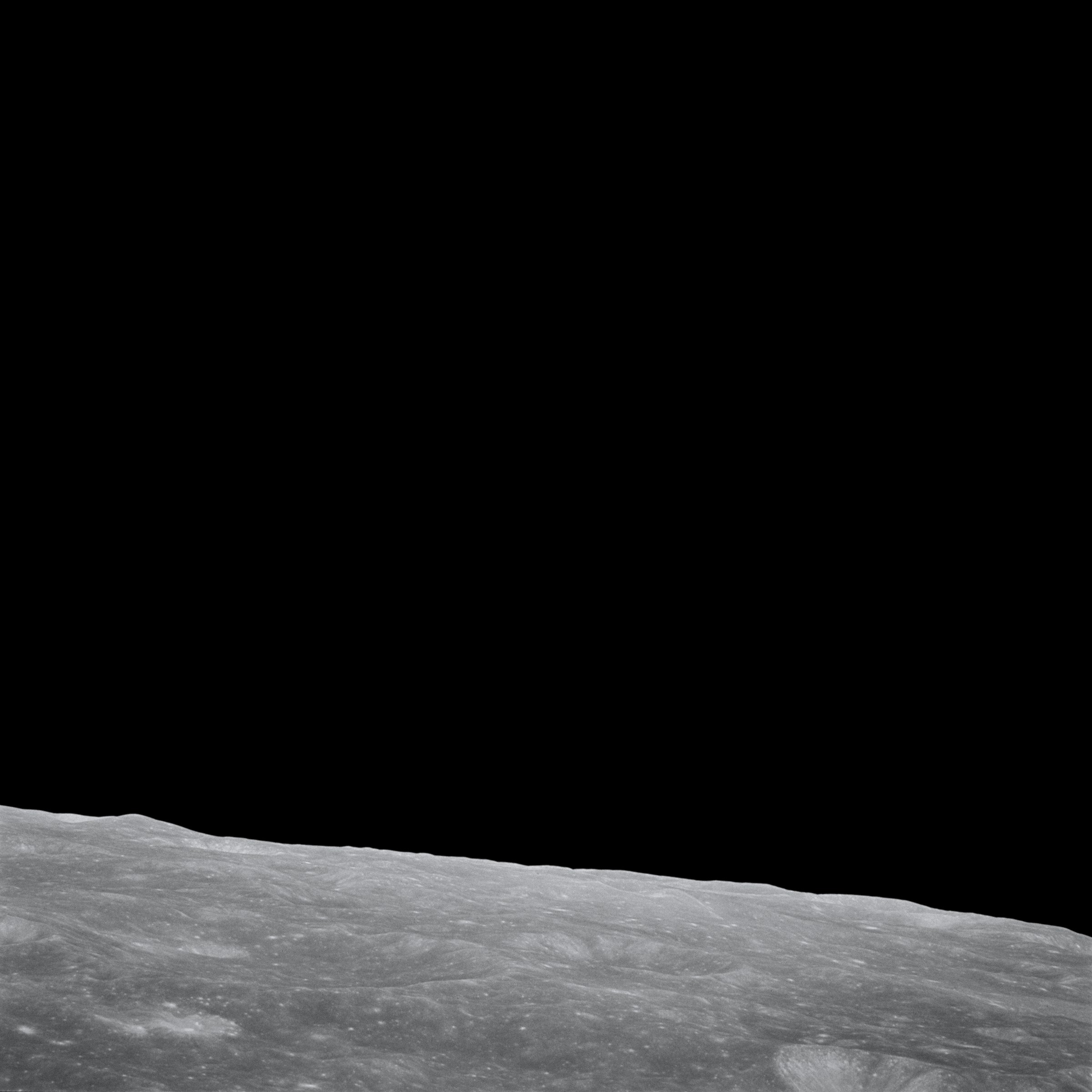
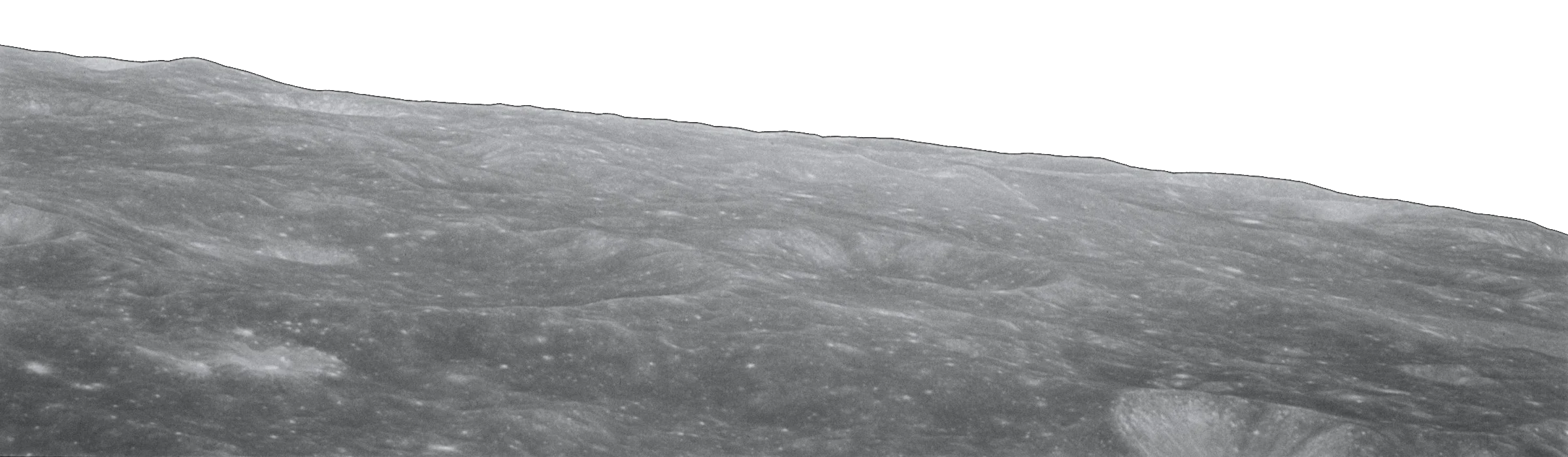
SHOT ON
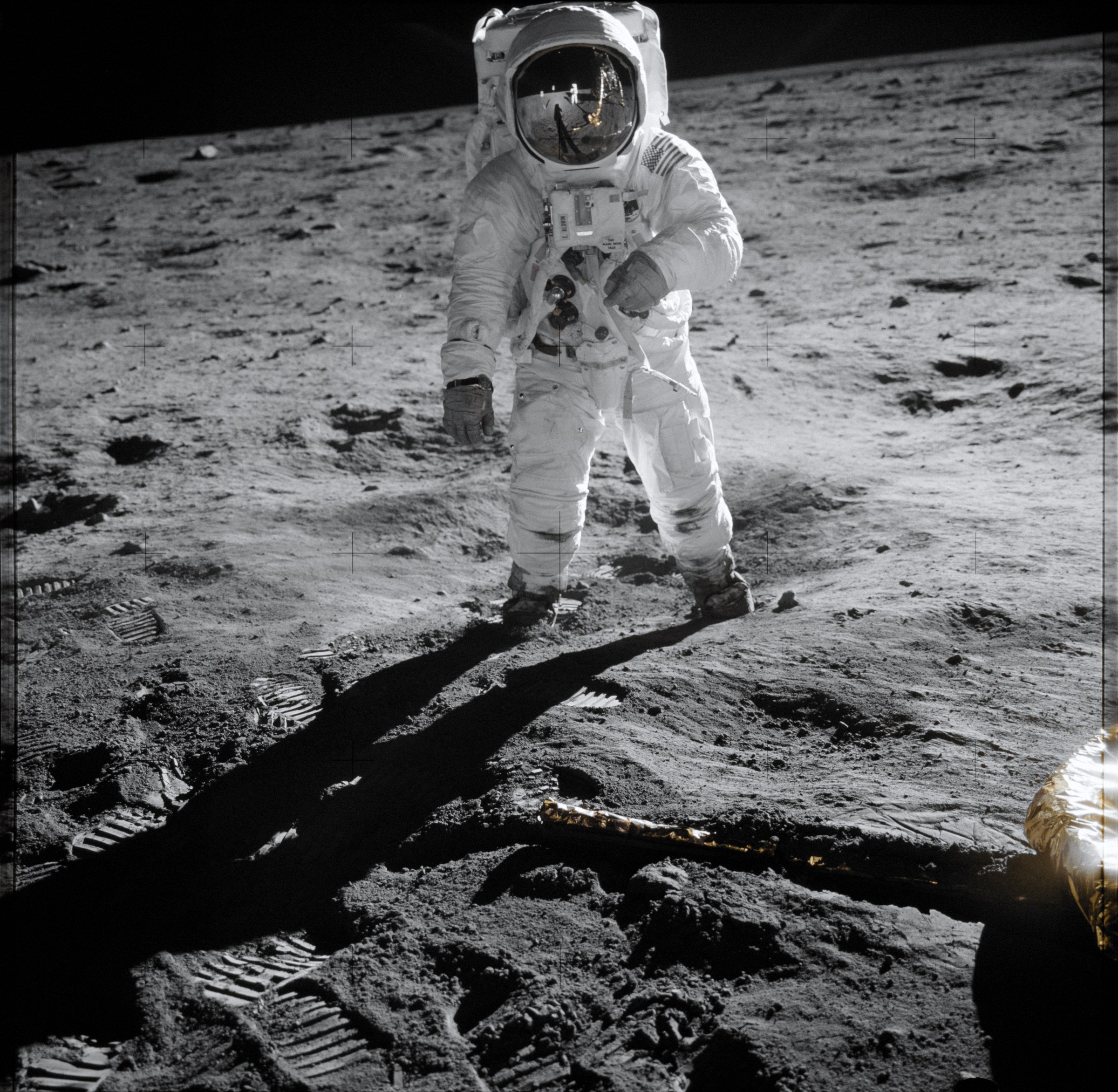
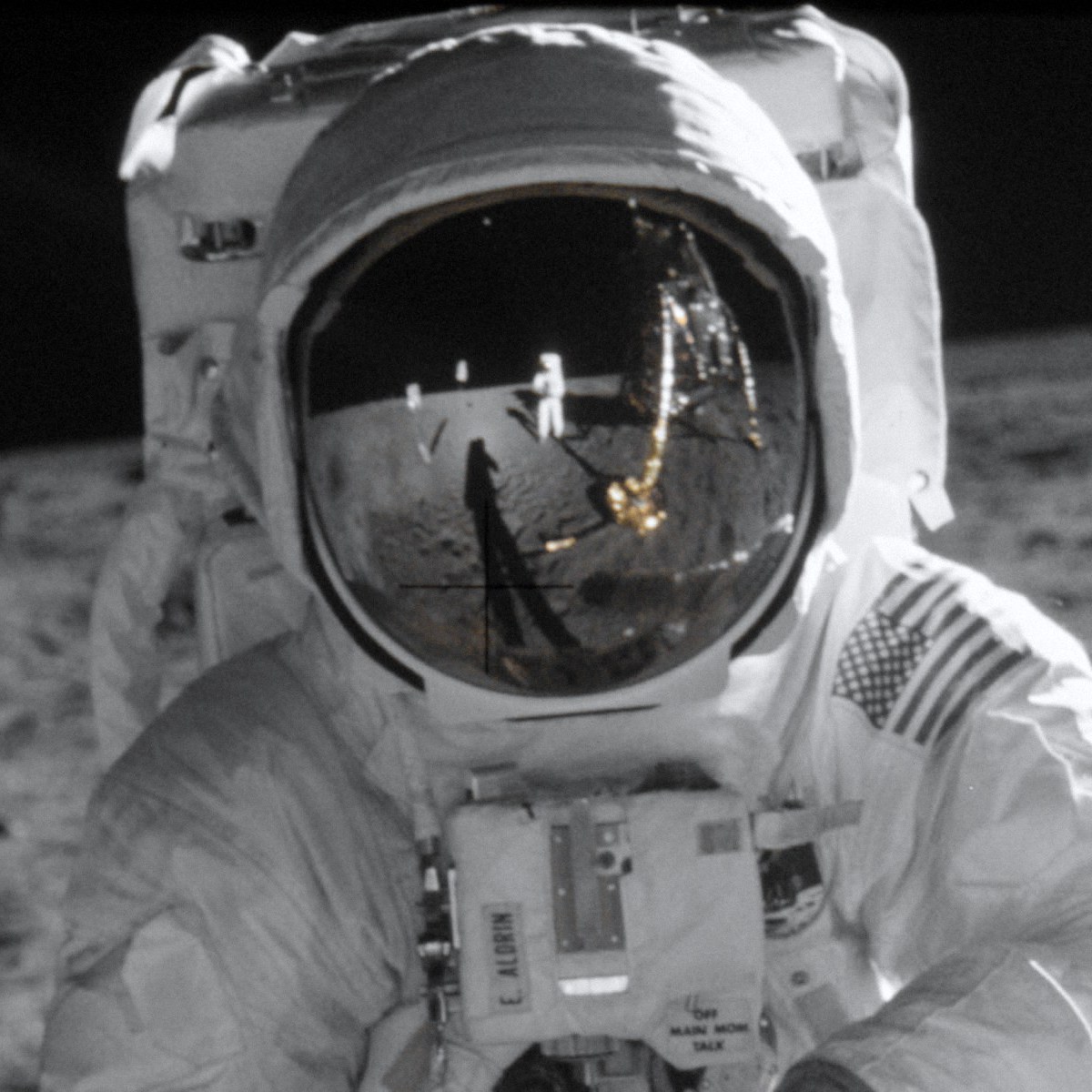
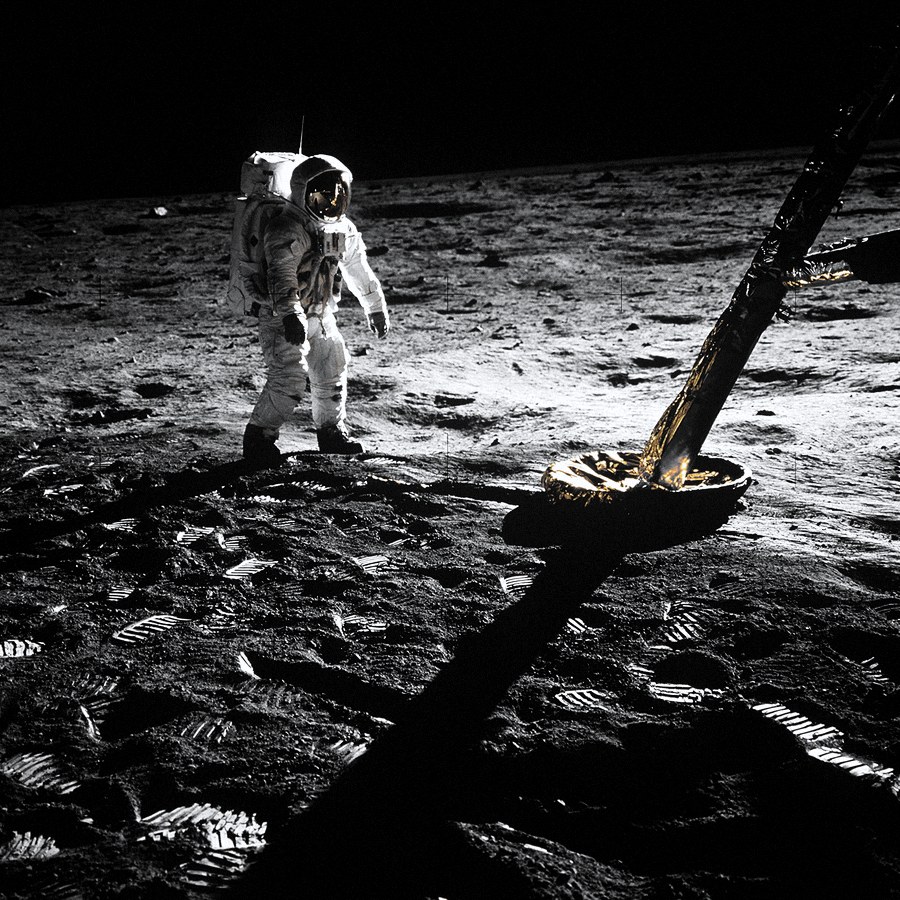
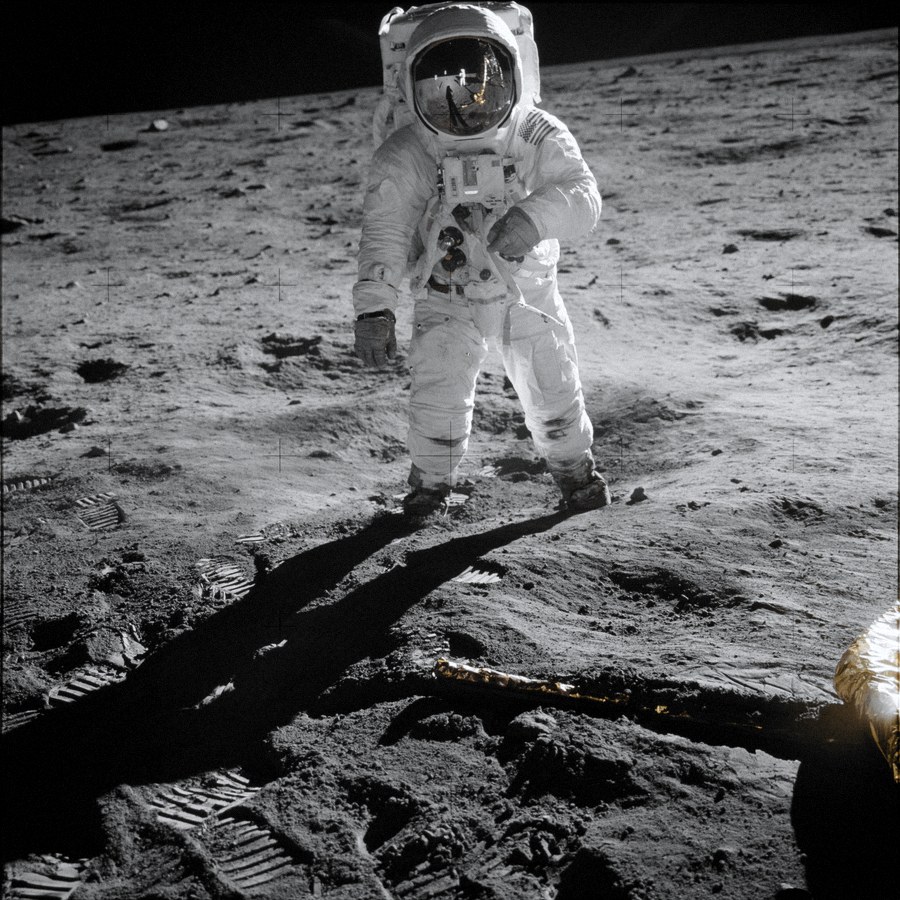
Neil Armstrong is in the visor.
He carried the camera for most of the two and a half hours outside, so nearly every Apollo 11 surface photograph is of Aldrin.
Magazine 40
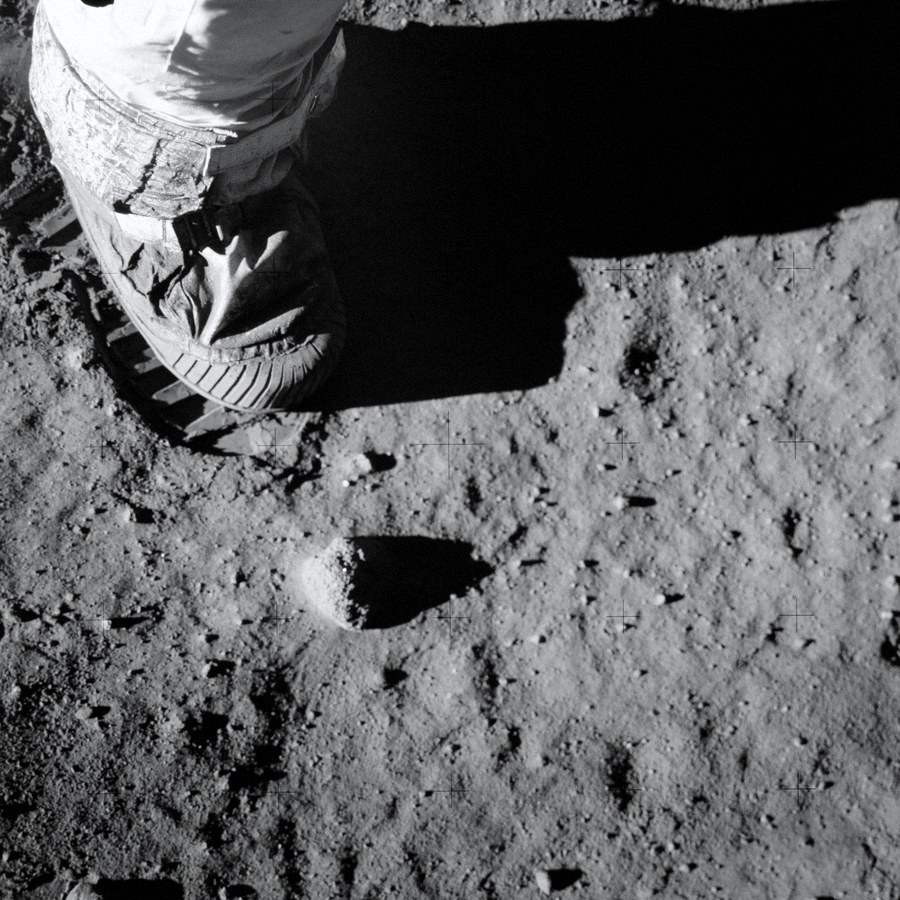
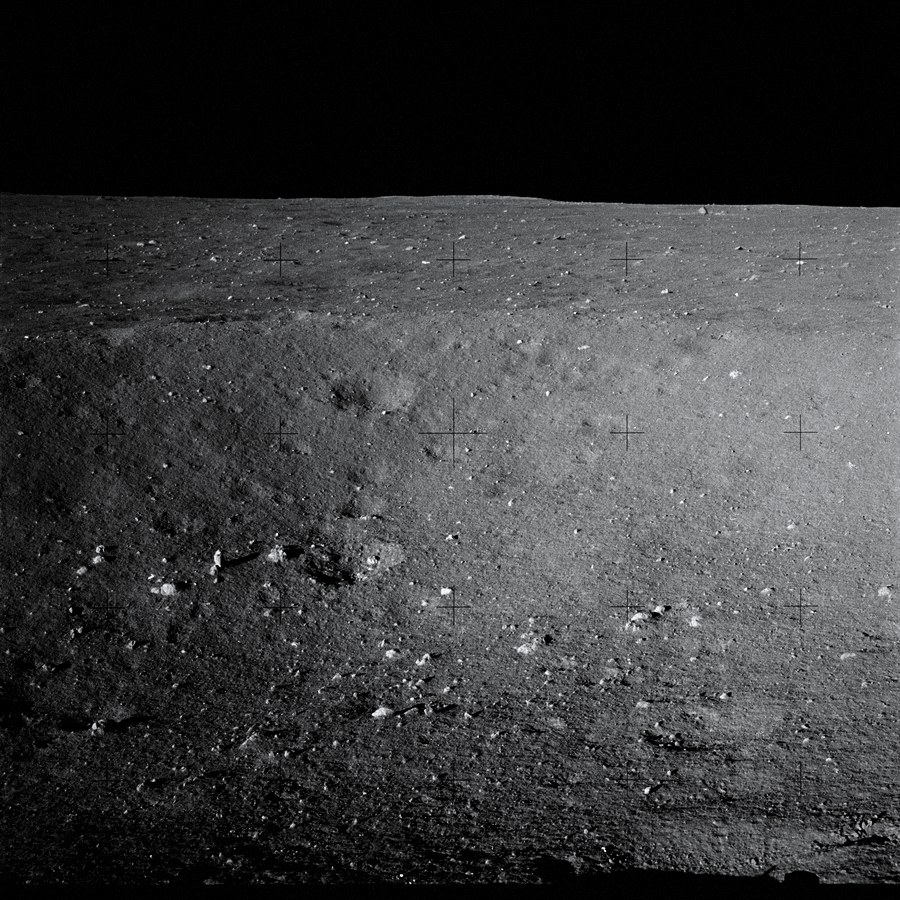
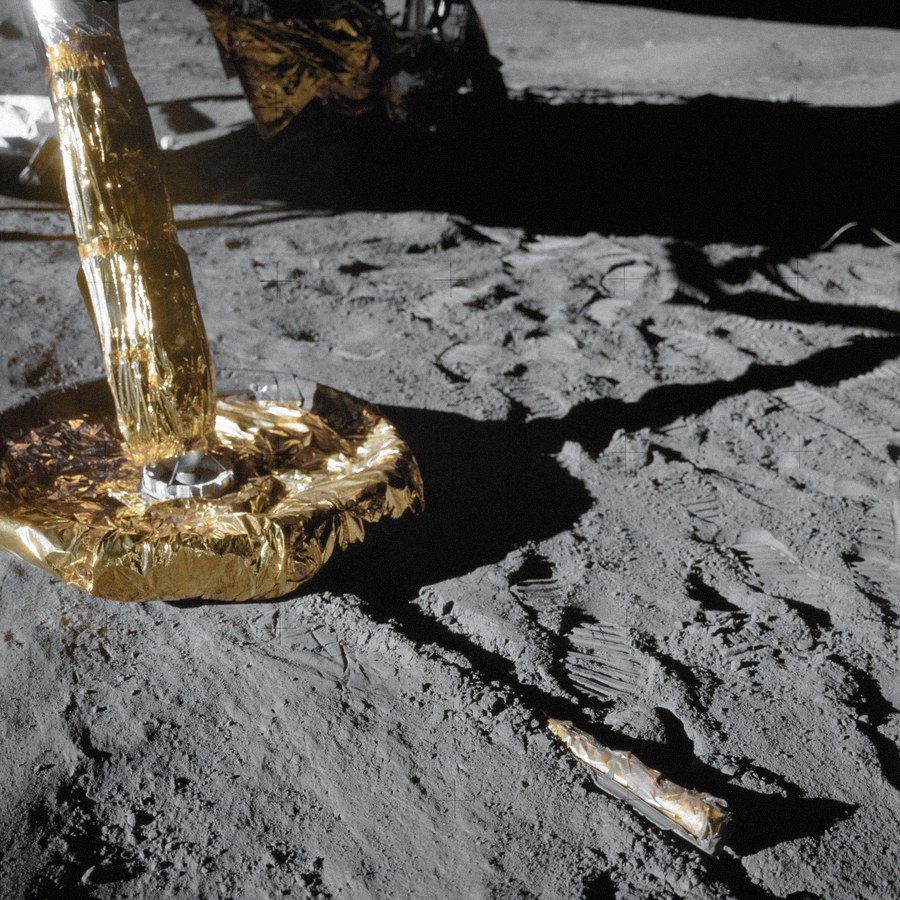
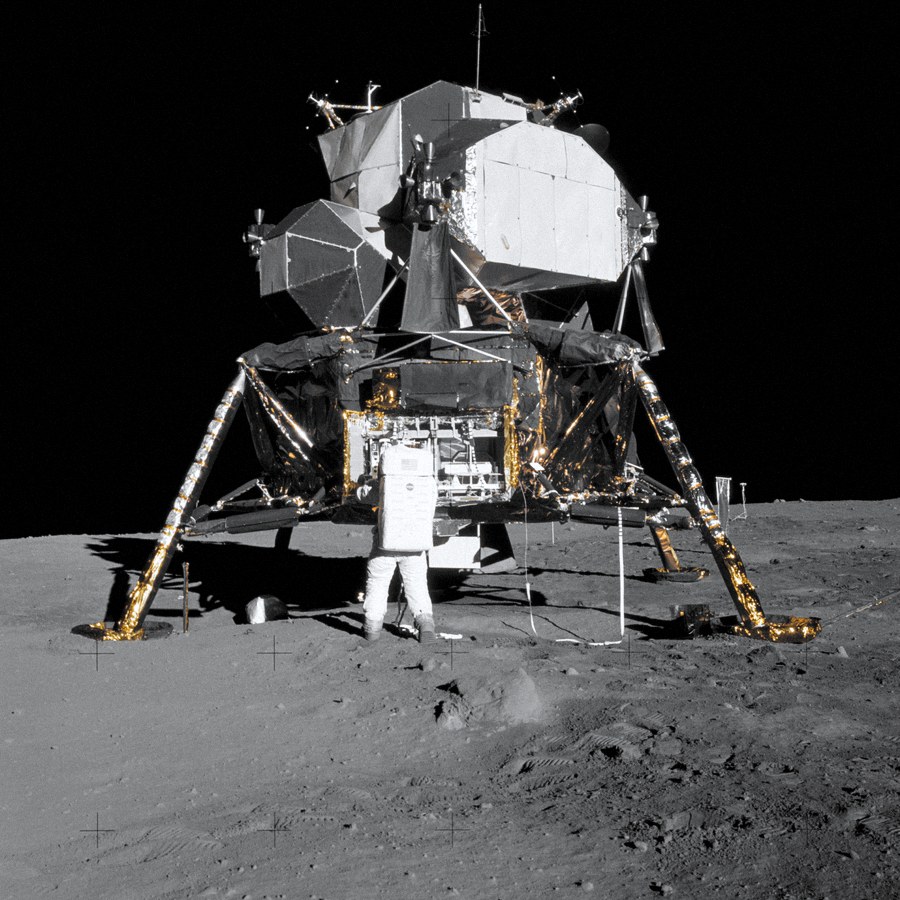
Magazine S. 70 mm Ektachrome, exposed on the lunar surface on 20 July 1969 and brought back in the ascent stage. The best-known colour photographs of Apollo 11 are on this roll.
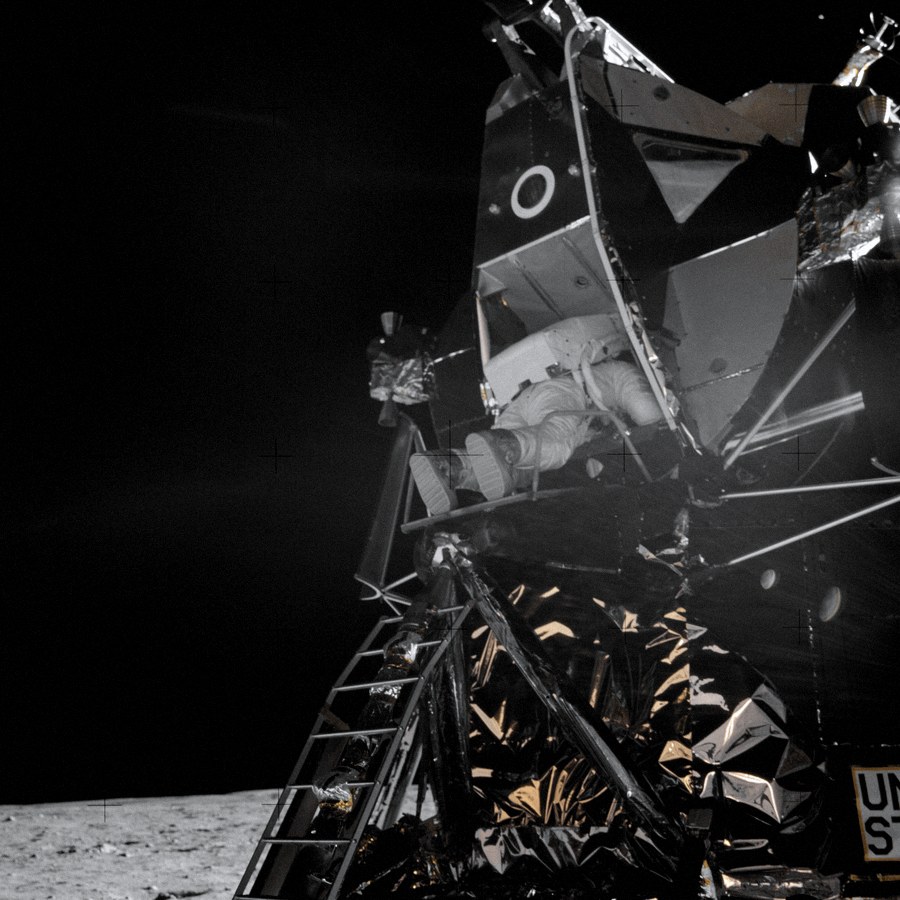
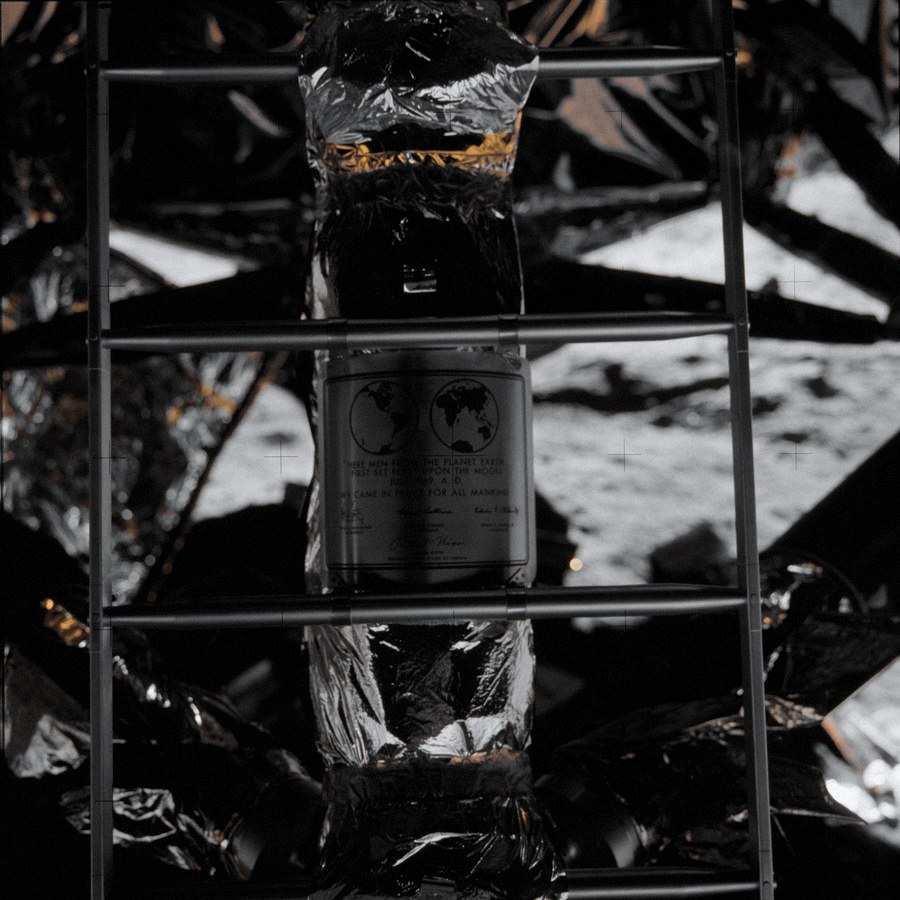
The plaque on the ladder.
Fixed to the descent stage, which stayed on the Moon. The lettering is Futura.
HERE MEN FROM THE PLANET EARTH
FIRST SET FOOT UPON THE MOON
JULY 1969, A.D.
WE CAME IN PEACE FOR ALL MANKIND
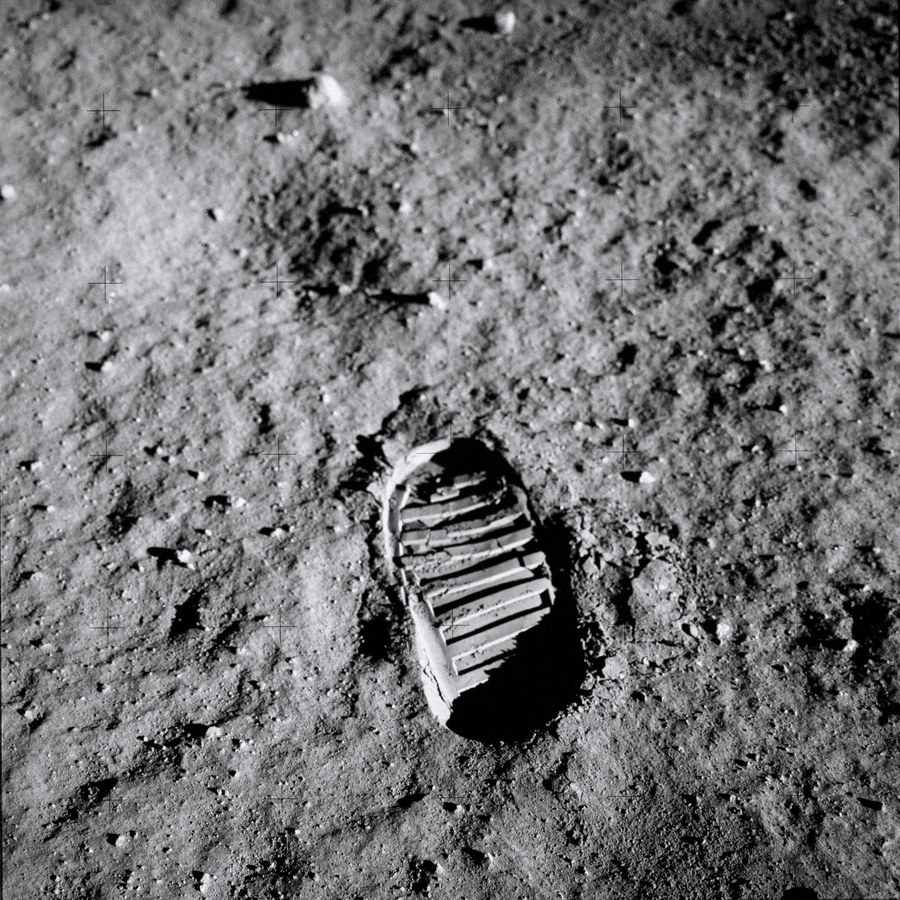
6 × 6
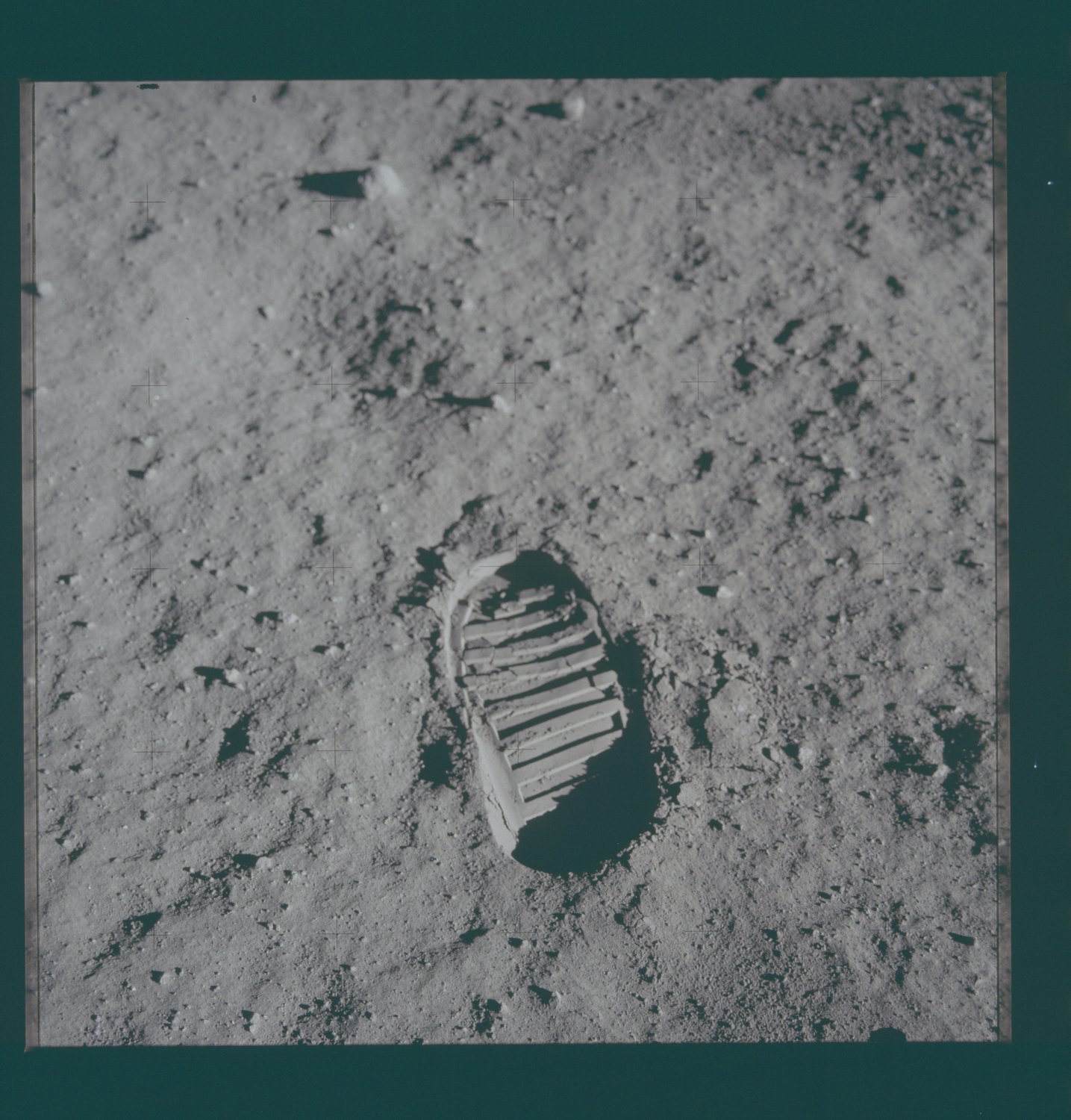
Square frames on 70 mm film. This is AS11-40-5877 as it came off the roll: the edge of the film, the picture, and the crosses of the réseau plate, a sheet of glass in front of the film that put a measuring grid on every frame.
V System
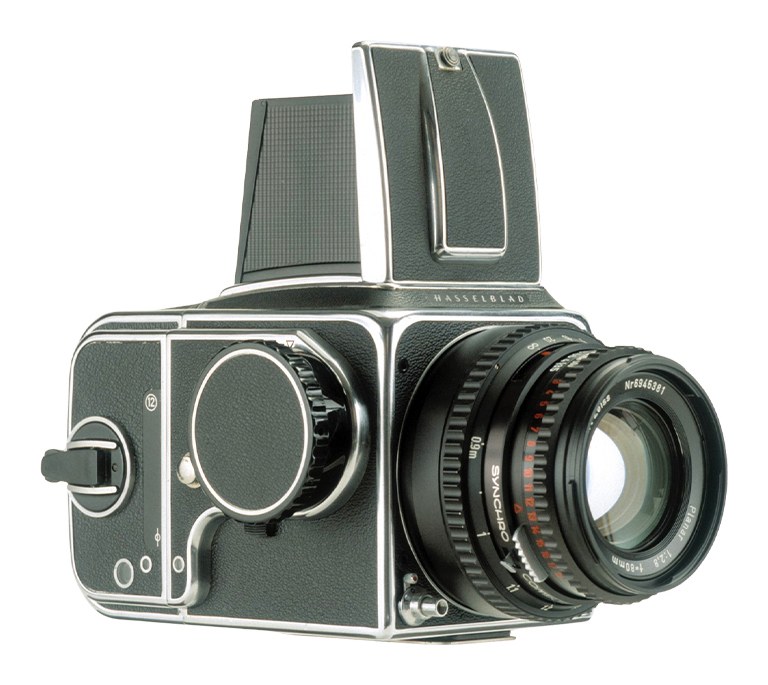
Body, lens, film magazine and finder, each one interchangeable, and a leaf shutter in every lens. The system grew from the 1600F of 1948. With the waist-level finder you hold the camera low and look down onto a square of ground glass.

01
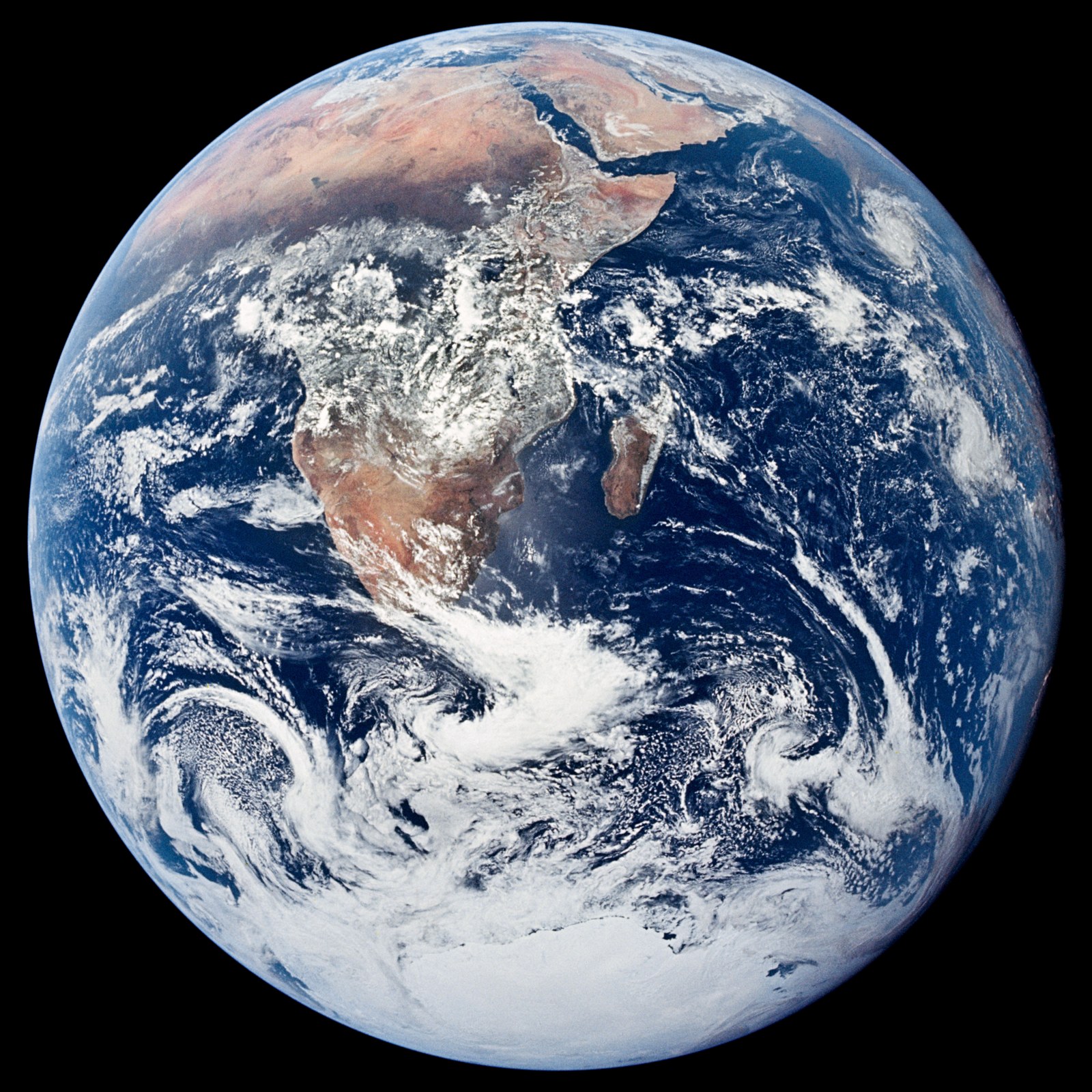
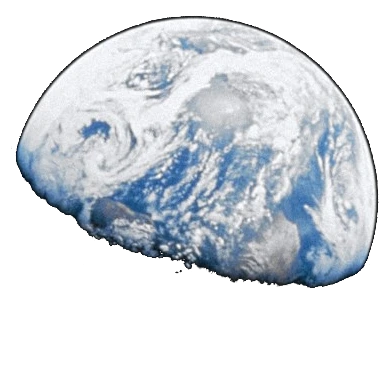
7 December 1972, about five hours after launch. Apollo 17 was on its way to the Moon with the Sun behind it, so the Earth was fully lit: Africa, Arabia, the Antarctic ice, a cyclone over the Indian Ocean. One of the crew photographed it with a Hasselblad and an 80 mm Zeiss lens. NASA filed the frame as AS17-148-22727. It is better known as the Blue Marble.
AS17-148-22727. Apollo 17, about 29,000 km from Earth.
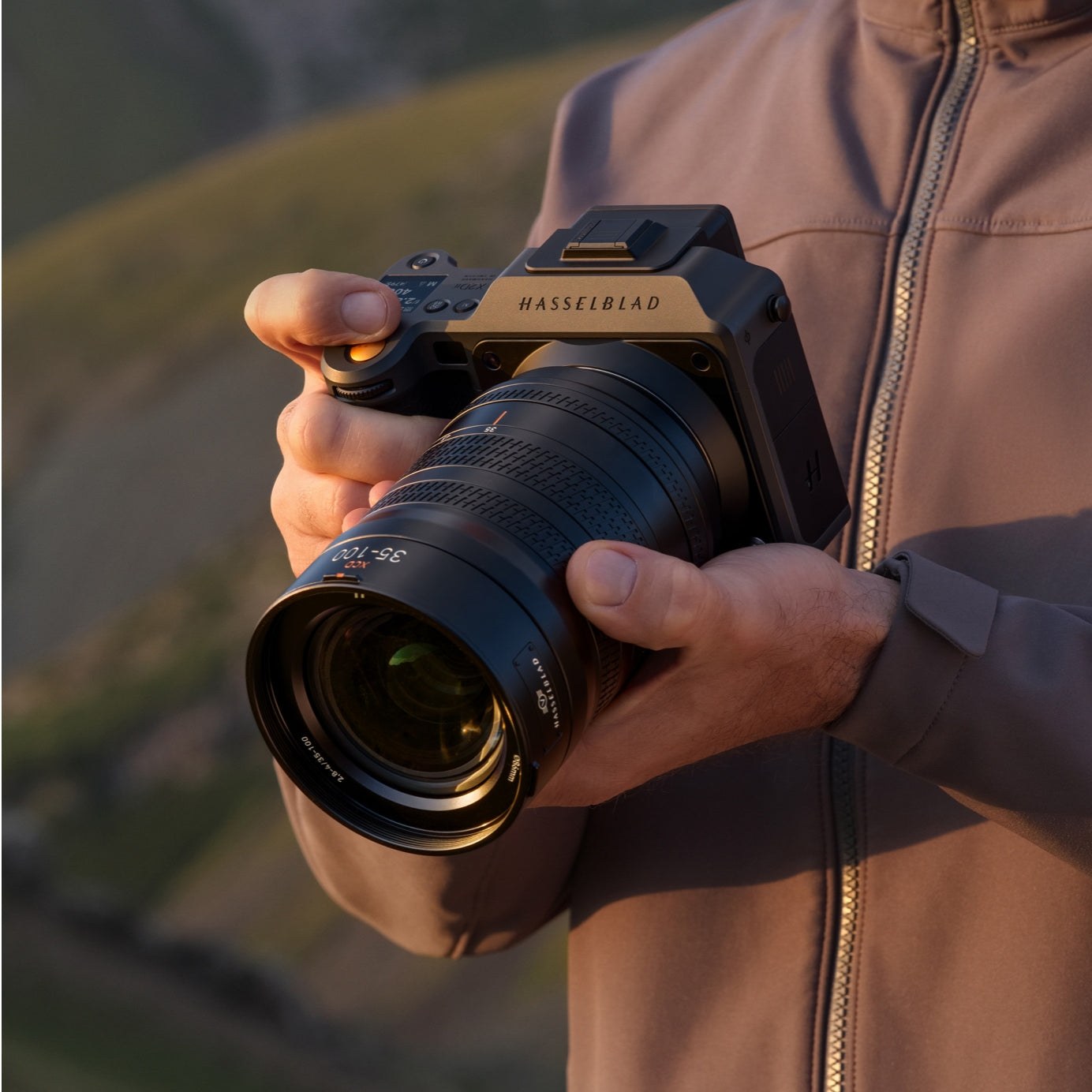
X2D II 100C
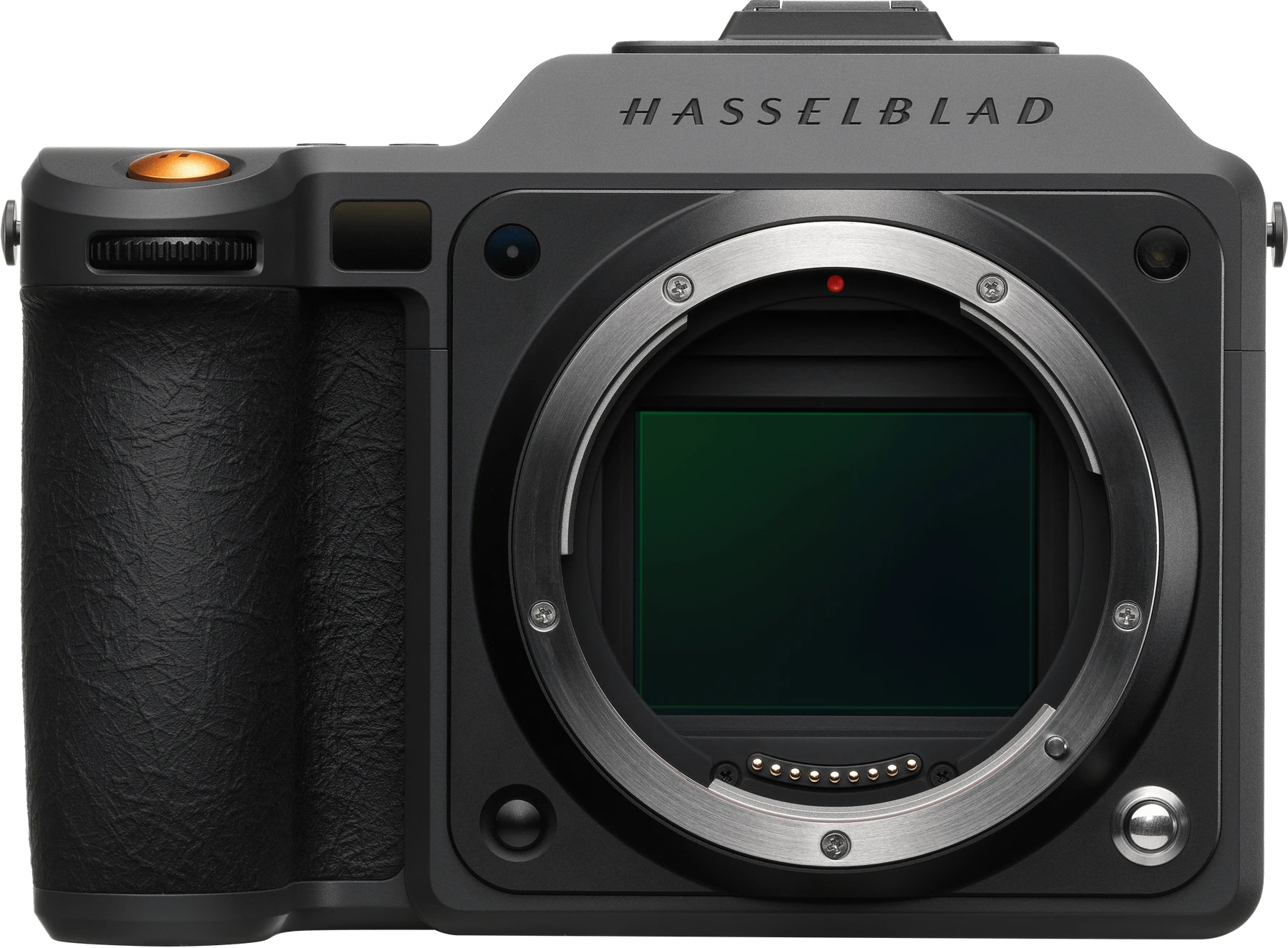
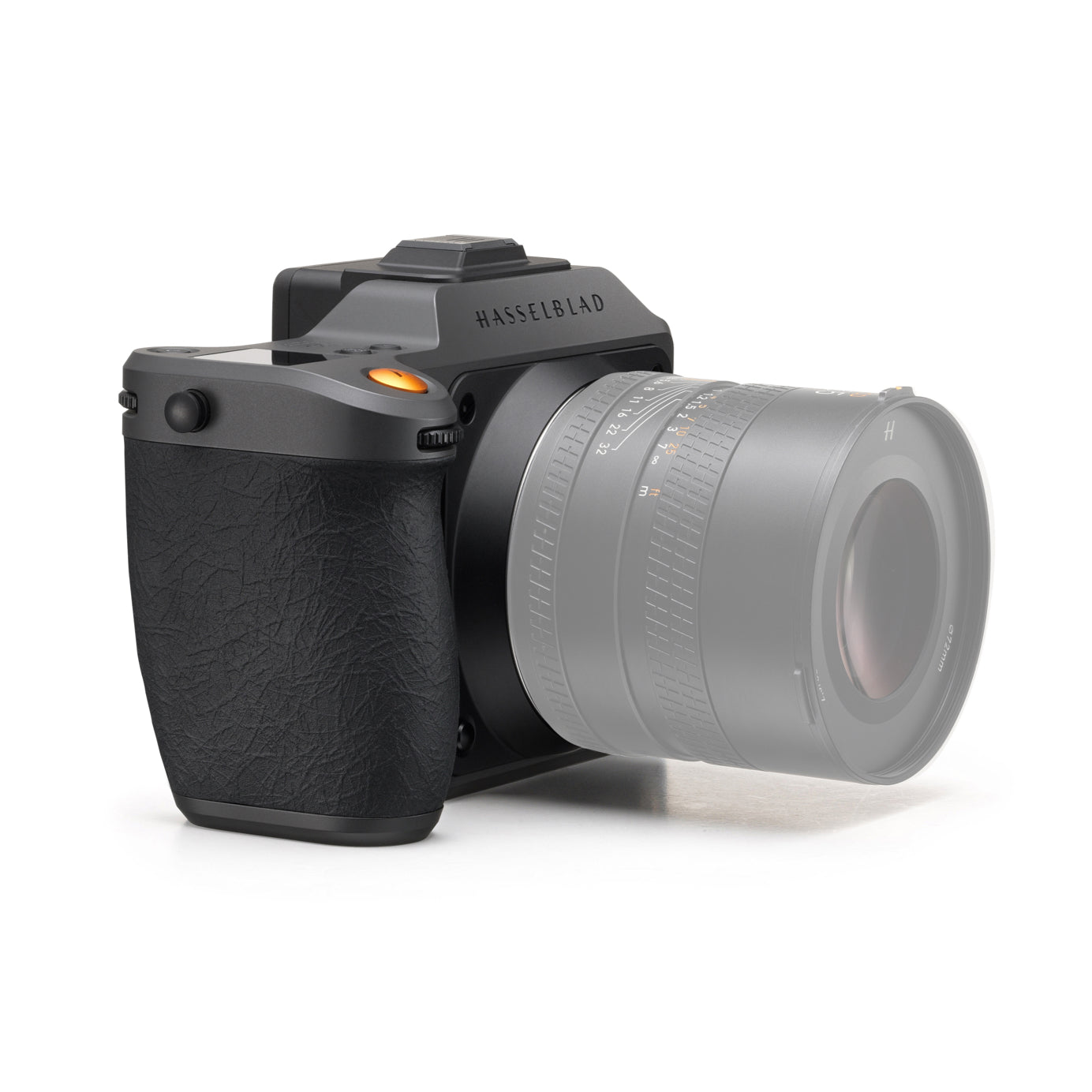
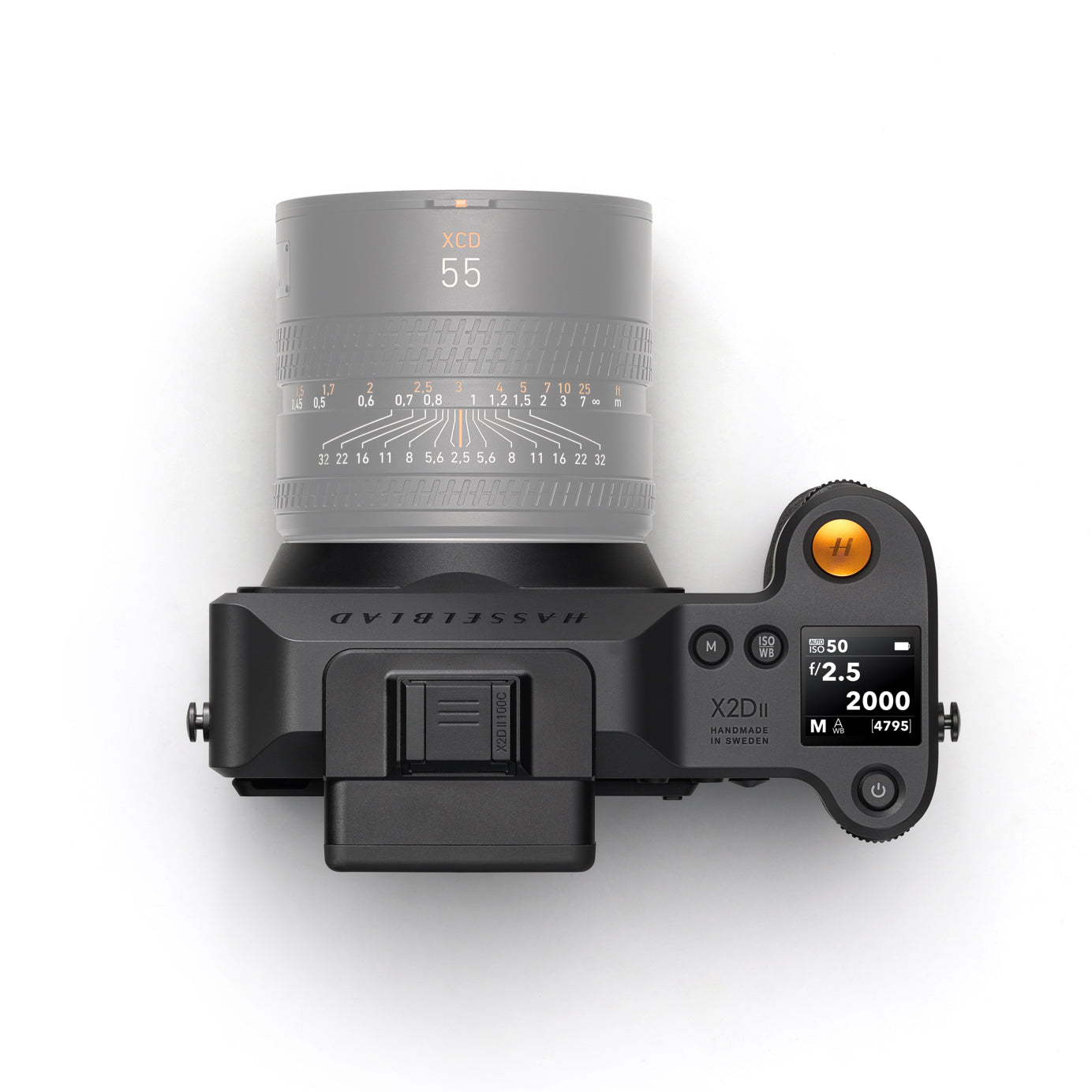
- Shutter release. Orange, as on the X2D.
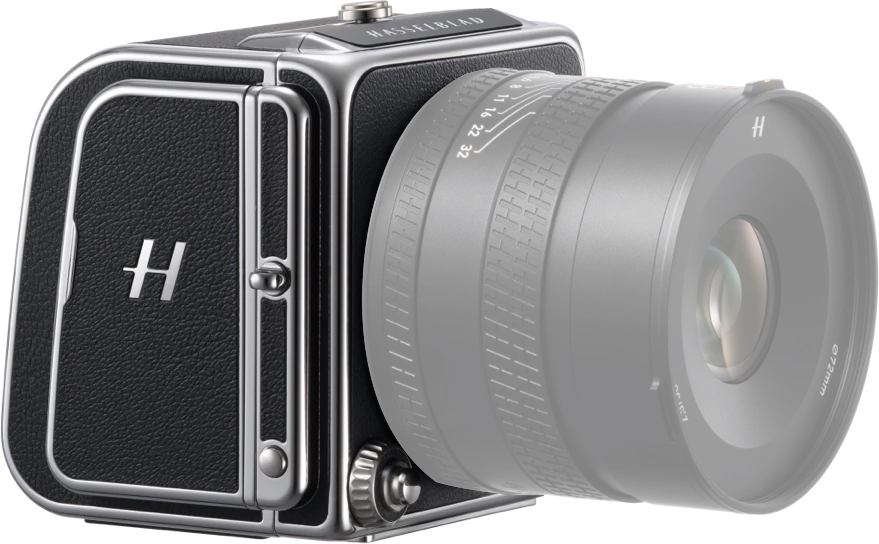
- Machined aluminium. 148.5 × 106 × 75 mm. 840 g with the battery.
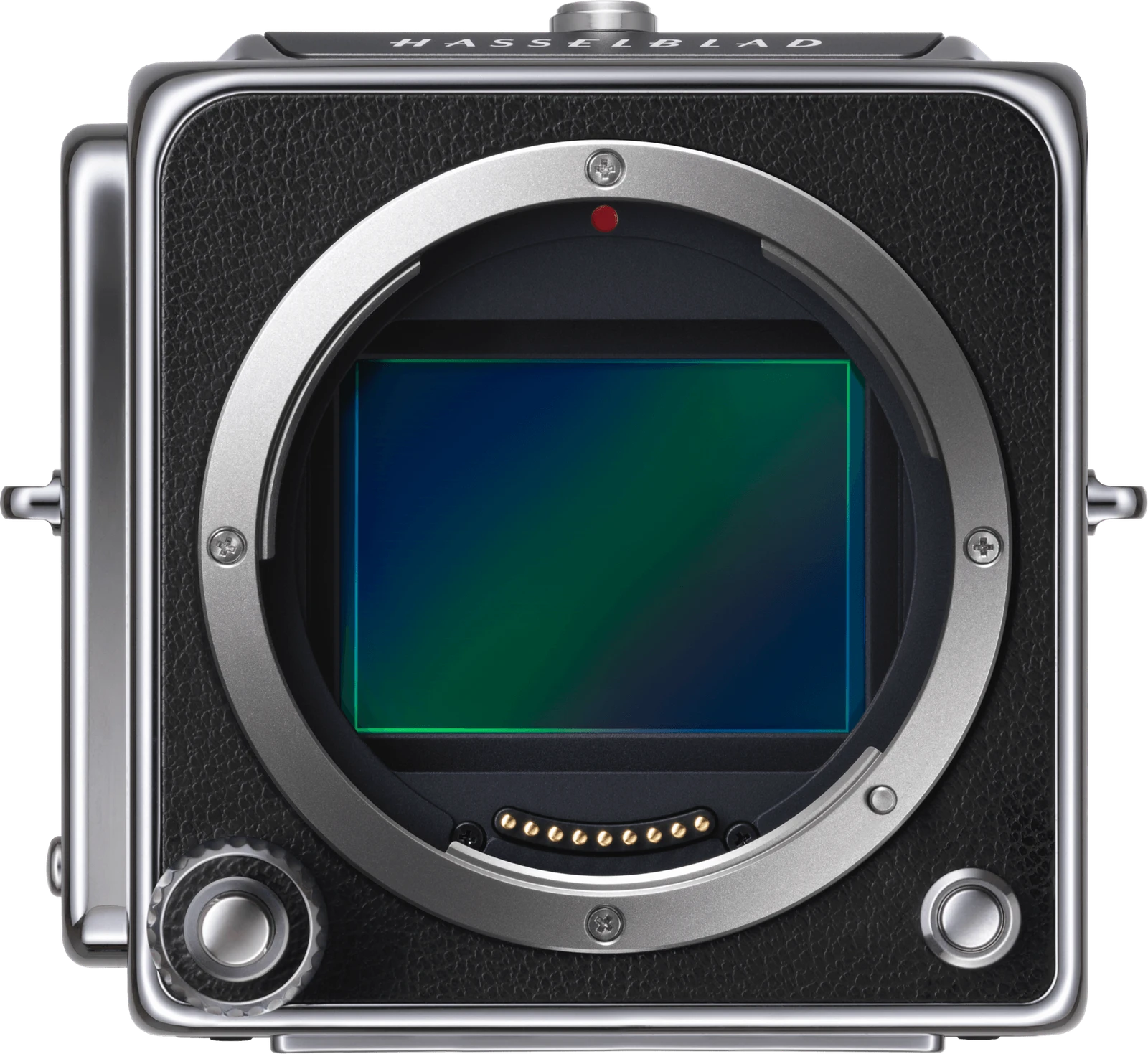
- 100 MP, 43.8 × 32.9 mm. 11,656 × 8,742 pixels, each 3.76 μm.
- XCD mount, leaf shutter. The shutter sits in the lens, so flash syncs at every speed.
- Sensor
- 100 MPBSI CMOS, 43.8 × 32.9 mm
- Colour
- 16-bitDynamic range up to 15.3 stops
- Shutter
- Leaf68 min to 1/4000 s with XCD lenses
- Stabilisation
- 10 stops5-axis, in the body
- Focus
- PDAF + LiDAR425 zones. AF-C, a first for Hasselblad
- Storage
- 1 TB insidePlus CFexpress Type B
- Screen
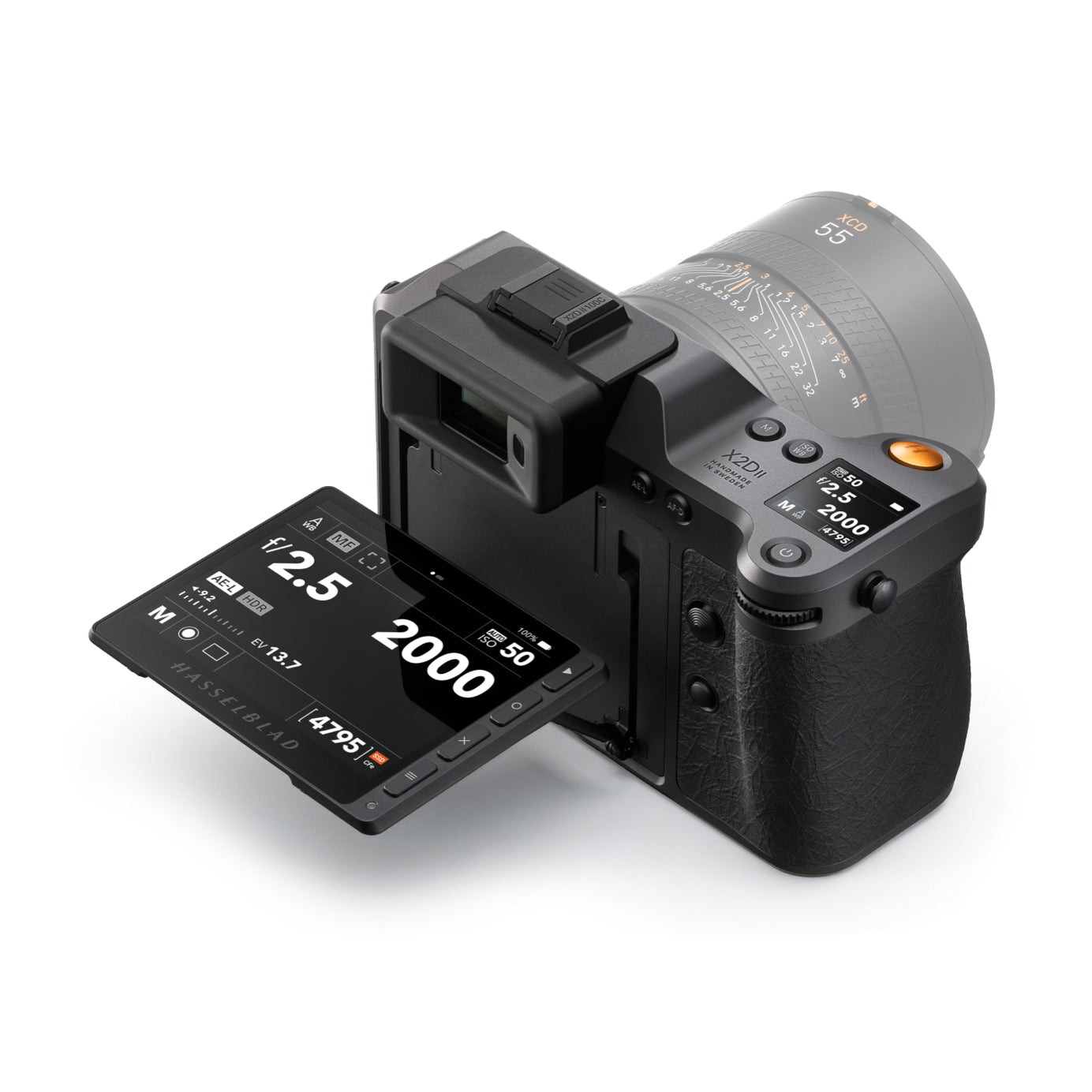
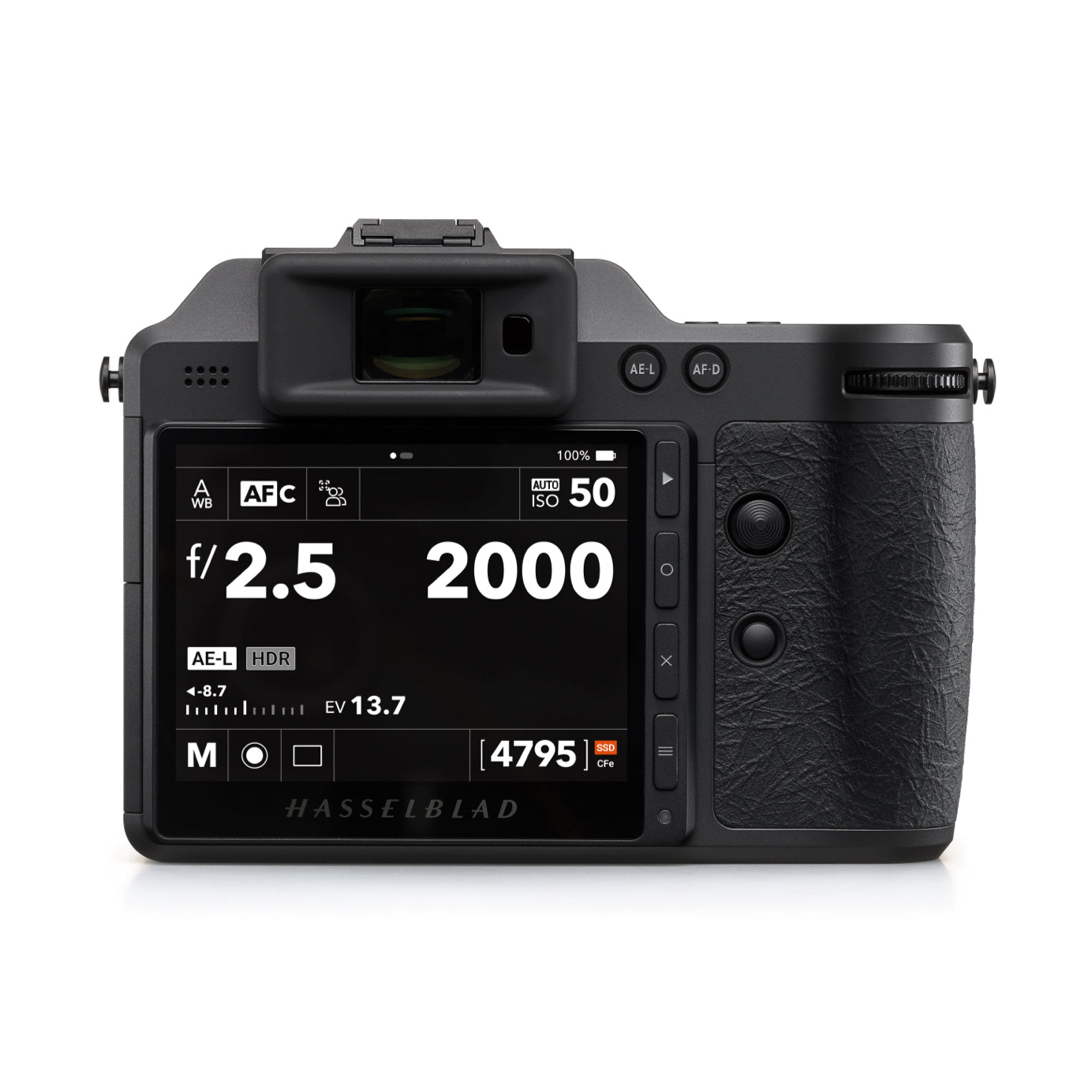
- 3.6″ OLED1,400 nits peak, tilts up 90°
- Weight
- 840 gBody with battery
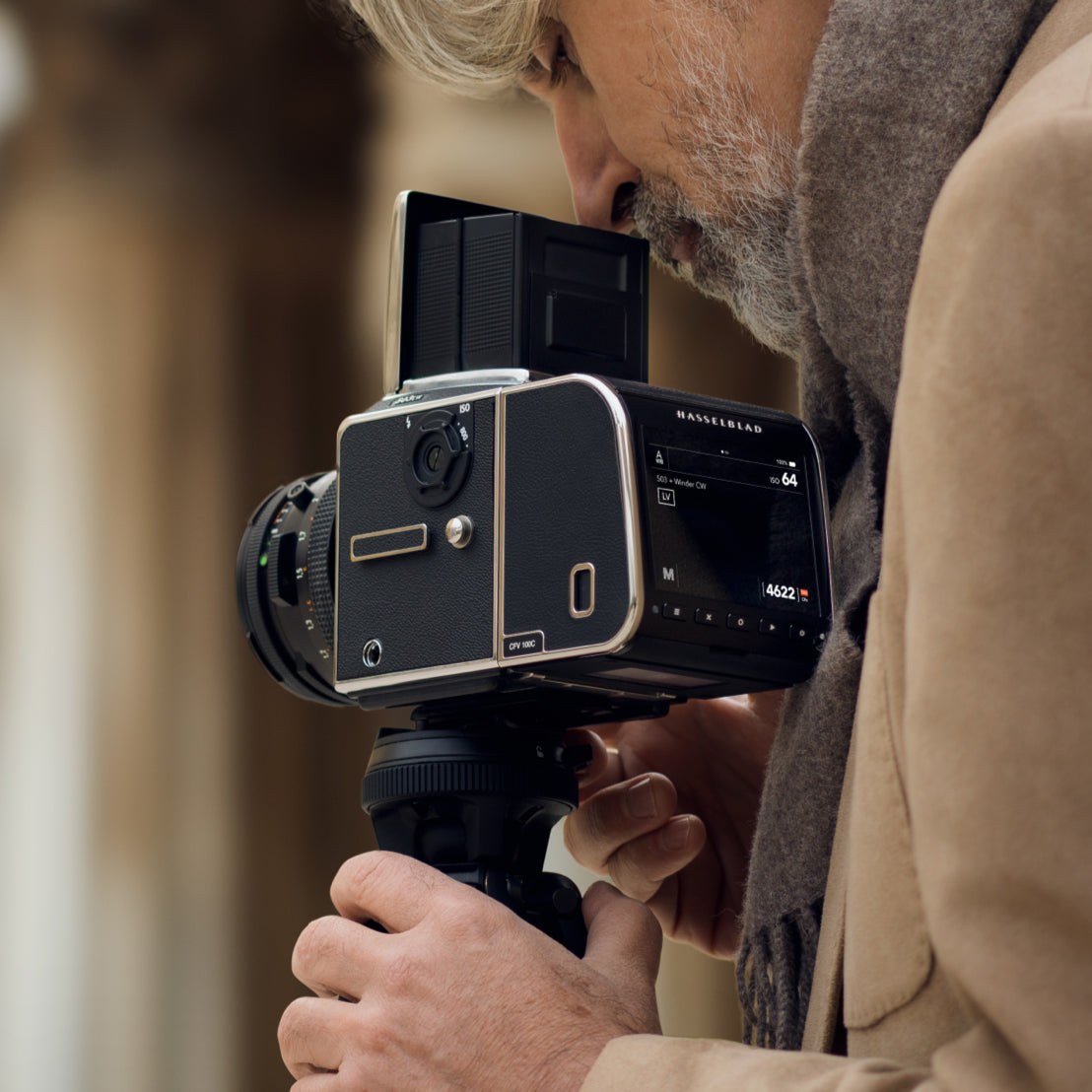
Tilts up 90°.
For waist-level shooting, as on the V System. It also tilts down 42.7° for holding the camera overhead.
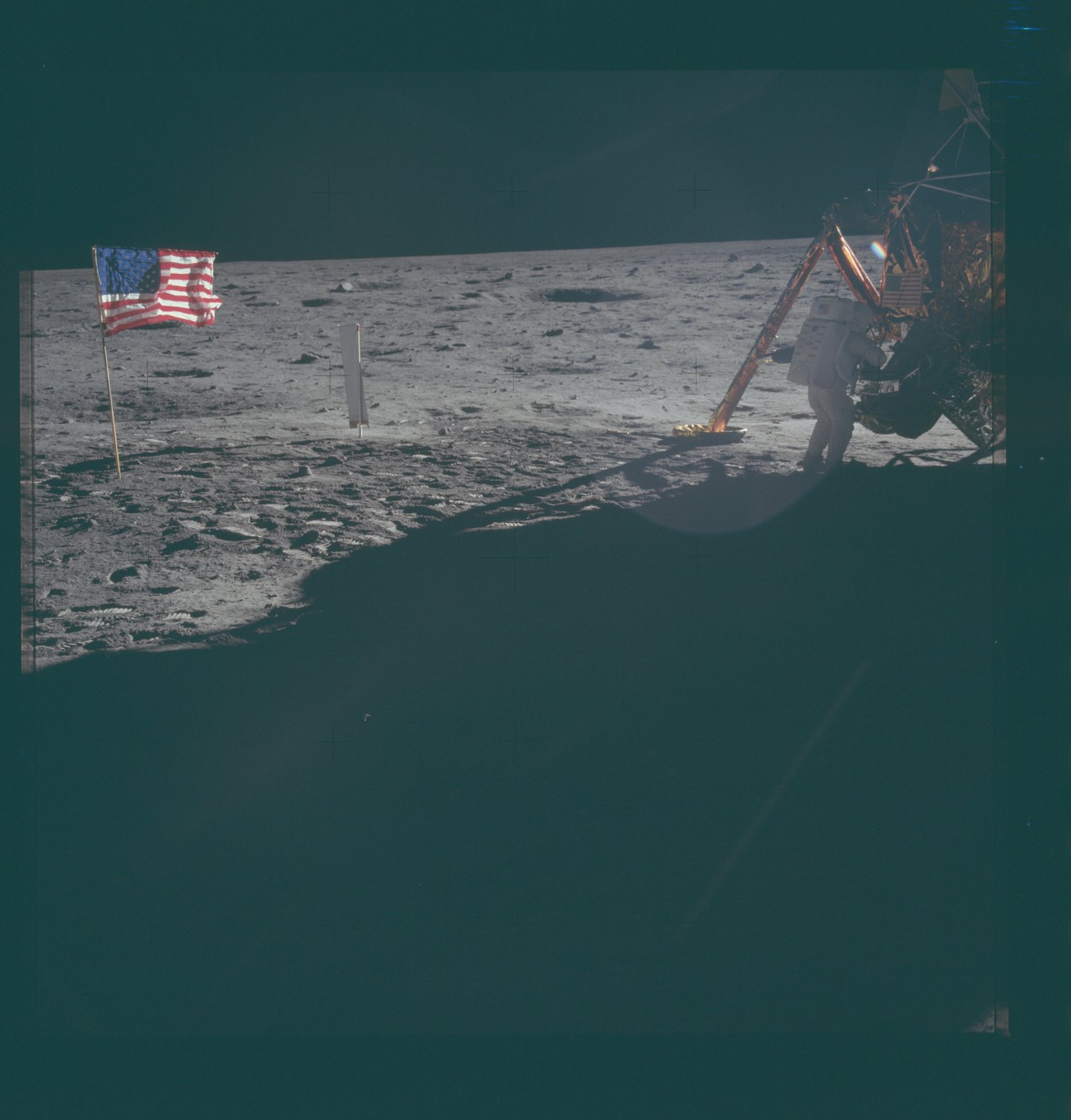
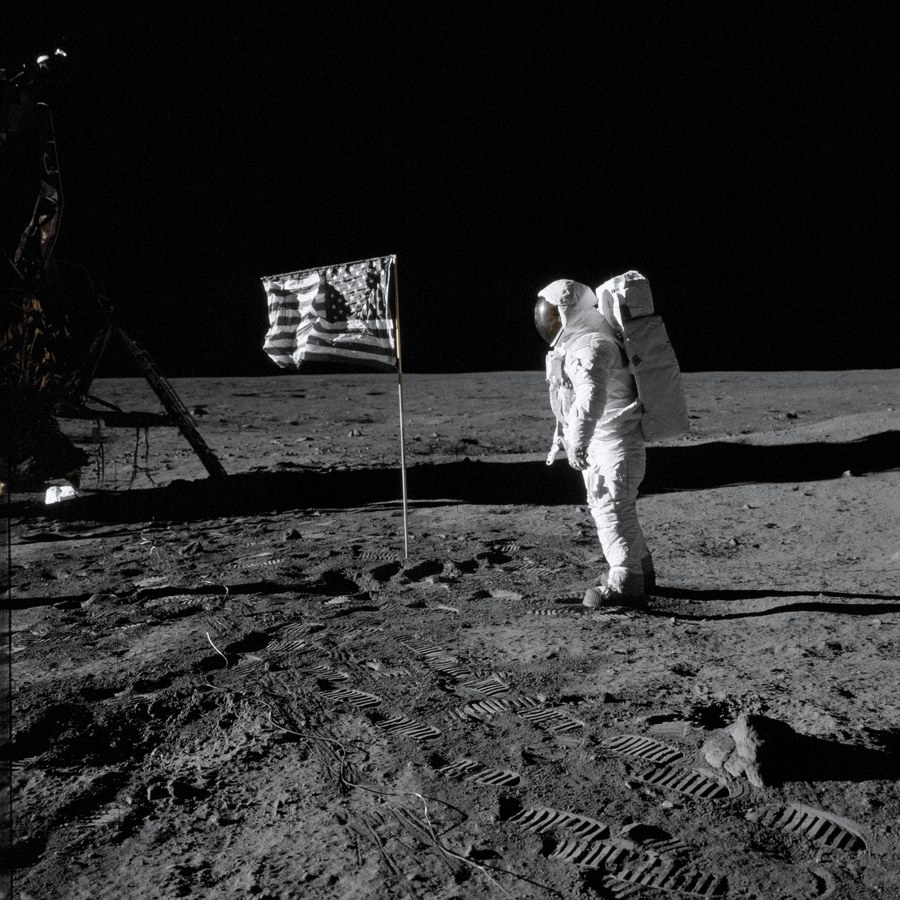
AS11-40-5886, one of the few surface photographs of Armstrong. The camera was left on the Moon.
Body, back and storage in one, 840 g.
70 mm Ektachrome, in a magazine
100 MP sensor, 43.8 × 32.9 mm
Zeiss Biogon 60 mm
The XCD range
Leaf shutter, in the lens
Leaf shutter, in the lens
Aimed from a bracket on the chest
Electronic viewfinder, or the screen at waist level
A glass plate of crosses in front of the film
LiDAR and 425 focus zones
The film magazines
The camera, with every frame on it
Shot on
Hasselblad.